What is a Cover Letter: What to Include, How to Write It, Formats, Samples
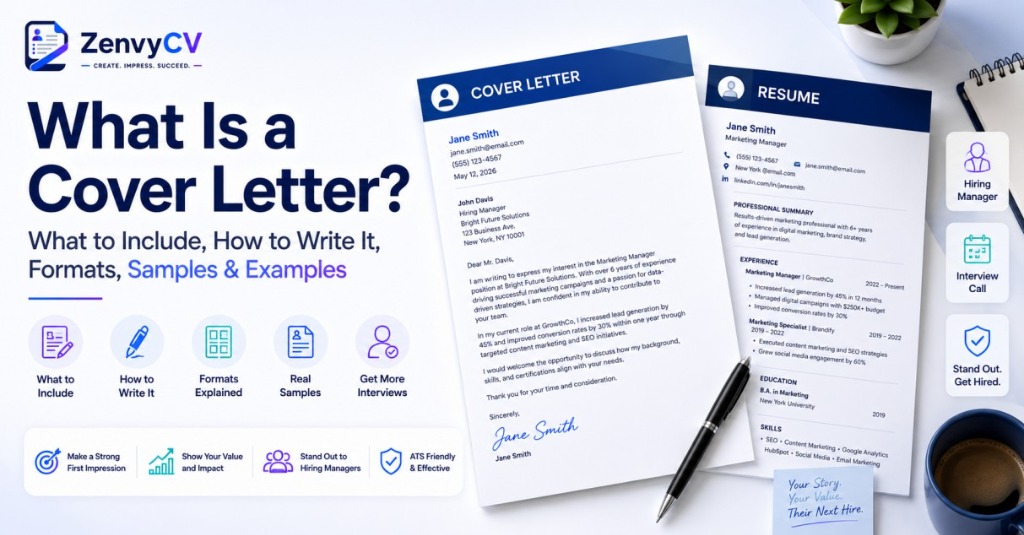
Looking for a job in 2026 without a cover letter is like showing up to an interview and refusing to introduce yourself. This guide covers everything you need to know about cover letters, starting with the basics: what a cover letter actually is, why it still matters, and when you should include one even if a job posting marks it as optional.
You will learn what a strong cover letter needs to include, from a clear header and greeting down to a closing paragraph that asks for the interview directly. We break down exactly how to write one step by step, covering research, strong opening lines, proof through numbers, and keeping the whole thing under half a page. You will also find a breakdown of the main cover letter formats, along with real sample letters written for different roles, including marketing, software engineering, healthcare, and entry-level positions, so you can see the advice applied in practice rather than just described.
Beyond the writing process, this article covers practical tips that improve your odds of landing an interview, along with the most common mistakes that quietly get applications rejected. We also compare cover letters and resumes directly, since the two documents serve different purposes and work best together rather than as duplicates of each other.
Finally, the FAQ section answers the questions job seekers ask most often, covering length, formatting, addressing the hiring manager, using AI responsibly, and whether you can skip a cover letter altogether. By the end, you will know exactly how to write a cover letter that gets read and actually helps you get hired.
What is a Cover Letter?
A cover letter is a one page document that you send along with your resume when applying for a job. It introduces you to the hiring manager, explains why you want the role, and highlights the skills and experiences that make you a strong fit. Think of it as a short, personal pitch that sits on top of your resume rather than repeating it.
📄 Cover Letter vs Resume
A cover letter introduces the candidate to the employer, while a resume lists facts, skills, and job history. Together, these two documents form a complete application package, with the cover letter adding context and personality that a resume alone cannot capture.
Why is a Cover Letter Important?
Cover letters still carry real weight in hiring decisions, even though opinions on their relevance have shifted over the years. Surveys of hiring managers show that a large majority say cover letters influence interview decisions, with about one in four calling them "very important."
The data on tailoring is even more convincing. A controlled field experiment involving 7,287 real job applications compared three groups: no cover letter, a generic cover letter, and a cover letter tailored to the specific job. Applications with no cover letter earned a 10.7% callback rate. A generic letter pushed that to 12.5%. A tailored letter reached 16.4%, a 53% lift over sending nothing at all. This shows that customization, not just the presence of a letter, is what actually moves the needle.
No Cover Letter
Callback rate when no cover letter is included in the application.
Generic Letter
Callback rate with a generic, copy-paste cover letter attached.
Tailored Letter
Callback rate with a tailored cover letter — a 53% lift over sending nothing.
That said, not every hiring manager reads every letter. Some newer surveys report lower engagement, with figures showing that only around a quarter of hiring managers read cover letters regularly, while a large share skip them entirely, depending on the company size, industry, and volume of applications received. The honest takeaway is that results vary by employer, but a well written, tailored cover letter almost never hurts your chances and often helps.
When Should You Include a Cover Letter?
You should include a cover letter in the following situations:
-
✅
The job posting requests one
Most hiring managers read cover letters when the posting specifically requires them, so skipping it in that case is an easy way to get filtered out.
-
✅
The posting marks it as optional
Many hiring managers still expect a cover letter even when the posting says it is "optional." Treat "optional" as "expected."
-
✅
You are changing careers or industries
A cover letter lets you connect past experience to a new role in a way your resume cannot.
-
✅
You have an employment gap to explain
A short, honest explanation in a cover letter can prevent a recruiter from making assumptions.
-
✅
You were referred by someone at the company
Mentioning a referral early in your letter signals a warm connection and can boost your odds significantly.
-
✅
You are applying to a small or mid sized company
Medium sized companies are among the most likely to request a cover letter as part of the application.
If none of these apply and the application system has no field for it, you can skip it. But when in doubt, write one. It rarely costs you anything and can only add value.
What Should a Cover Letter Include?
A strong cover letter includes the following core elements:
Header
Your name, phone number, email, and the date.
Greeting
Addressed to a specific person whenever possible.
Opening Paragraph
States the position you are applying for and gives one compelling reason you are a strong fit.
Body Paragraph(s)
Connect your skills and achievements directly to the job description, using specific numbers and results rather than vague claims.
Closing Paragraph
Restates your interest, thanks the reader, and includes a clear call to action, such as requesting an interview.
Sign Off
A professional closing line and your full name.
How to Write a Strong Cover Letter?
Follow these steps to write a cover letter that gets read and gets results.
Research the Company and the Role First
Look at the job description, the company website, and recent news about the organization. Identify two or three requirements you meet strongly and build your letter around them.
Open with a Hook, Not a Template Line
Avoid generic openers like restating the job title you saw online. Instead, lead with a specific achievement, a shared connection, or a clear statement of what you bring to the role.
Prove Your Value with Numbers
Instead of saying you are "results driven," state what you actually achieved. For example: increased regional sales by 22% in one year, or reduced customer support response time from 12 hours to 3 hours. Concrete numbers are far more convincing than adjectives.
Match Your Language to the Job Posting
Many companies use applicant tracking systems that scan for keywords. Mirror the language used in the posting where it genuinely applies to your background.
Keep It Short
Aim for roughly 200 to 350 words, or about three to four paragraphs. A cover letter that runs longer than one page usually gets skimmed or skipped entirely.
End with a Clear, Confident Closing
State that you would welcome the opportunity to discuss the role further, then thank the reader for their time.
Proofread Carefully
Spelling mistakes and grammatical errors are one of the fastest ways to get a cover letter rejected, since they signal carelessness.
Cover Letter Formats
There are a few standard formats you can choose from depending on the role and industry.
📋 Traditional Format
Follows the classic structure: header, greeting, three paragraphs (opening, body, closing), and a sign off. Works well for most industries, including finance, healthcare, education, and government roles.
🔍 Problem-Solution Format
Identifies a challenge the company faces and positions you as the person who can solve it. Works especially well for technical, sales, or operations roles where impact matters more than tone.
📖 Story-Driven Format
Opens with a short, specific anecdote that illustrates a relevant skill or value, then connects that story to the job. Suits creative, marketing, and culture-focused companies well.
⚡ Skills-First Format
Leads with a short list or summary of your top three to five relevant skills before expanding on them. Works well for technical and skills-based hiring processes where recruiters scan quickly.
Regardless of format, keep the document to one page, use a clean and simple layout, and avoid dense blocks of text.
Cover Letter Examples and Samples
Below are short sample cover letters for different job positions. Use these as a starting structure, then personalize the details to match your own experience and the specific job posting.
Example 1: Marketing Coordinator
Dear Ms. Alvarez,
I am excited to apply for the Marketing Coordinator position at Bright Path Media. In my current role at Nova Digital, I grew organic social engagement by 34% in six months by redesigning our content calendar around audience data rather than guesswork.
Your job posting mentions a need for someone comfortable managing multiple campaigns at once. Over the past two years, I have coordinated up to five simultaneous product launches, working closely with design, sales, and customer support teams to keep every deadline on track.
I would welcome the chance to bring this same hands-on approach to Bright Path Media. Thank you for considering my application. I look forward to discussing how I can contribute to your team.
Sincerely,
Jordan Lee
Example 2: Software Engineer
Dear Hiring Team,
I am writing to apply for the Backend Software Engineer role at Cedar Systems. During my time at Fintrack, I rebuilt our payment processing service to handle 3x the transaction volume while cutting average response time from 800ms to 210ms.
I noticed Cedar Systems is scaling its infrastructure to support new enterprise clients. My background in distributed systems and my experience leading a three person engineering pod through a similar scaling project make me confident I can contribute from day one.
I would appreciate the opportunity to talk through how my experience aligns with your roadmap. Thank you for your time and consideration.
Best regards,
Priya Nair
Example 3: Registered Nurse
Dear Mr. Thompson,
I am applying for the Registered Nurse position in the Cardiology unit at Riverside General Hospital. Over the past four years at Lakeside Medical Center, I managed care for an average patient load of eight per shift while maintaining a 98% patient satisfaction score.
Riverside's reputation for patient-centered cardiac care aligns closely with how I approach my own practice, treating every patient interaction as an opportunity to build trust as well as deliver clinical excellence.
I would welcome the chance to bring my clinical skills and calm, communicative bedside manner to your team. Thank you for considering my application.
Sincerely,
Daniel Osei
Example 4: Entry-Level / Recent Graduate
Dear Hiring Manager,
I am excited to apply for the Junior Analyst position at Harbor Consulting. As a recent Economics graduate from State University, I completed a capstone project analyzing regional labor market trends, which was later cited by a local economic development office in its quarterly report.
While I am early in my career, I bring strong analytical skills from coursework and internships, along with a genuine curiosity about the type of client work Harbor Consulting is known for.
I would appreciate the opportunity to discuss how my academic background and eagerness to learn could contribute to your team. Thank you for your time.
Best regards,
Maria Gonzalez
Cover Letter Tips That Increase Interview Chances
-
💡
Always tailor the letter to the specific job
Tailoring alone accounted for most of the improvement in callback rates seen in field studies, far more than simply attaching a generic letter.
-
💡
Address the hiring manager by name whenever possible
It shows you did your research and did not mass apply.
-
💡
Lead with your strongest, most specific achievement
Many hiring managers say the introduction is the most important part of a cover letter, so do not bury your best point in the middle.
-
💡
Mention referrals if you have one
Referred candidates get hired at a noticeably higher rate than candidates who apply without a referral.
-
💡
Keep formatting clean and consistent with your resume
Use the same font and header style across both documents.
-
💡
Quantify results wherever you can
Numbers make claims verifiable and memorable in a way vague adjectives cannot.
-
💡
End with a specific, confident call to action
Request a conversation rather than passively hoping for a response.
Common Cover Letter Mistakes to Avoid
-
⚠️
Using a generic, copy-paste template
Recruiters who read many letters can spot a template within the first sentence, and it signals low effort.
-
⚠️
Repeating the resume word for word
A cover letter should add new context, not restate your job history line by line.
-
⚠️
Writing more than one page
A cover letter that runs long takes up space that could be used to strengthen the rest of your application, and most hiring managers prefer something they can read quickly.
-
⚠️
Using desperate or overly emotional language
Phrases that express desperation rather than confidence tend to weaken your position rather than strengthen it.
-
⚠️
Skipping proofreading
Typos and grammar mistakes suggest carelessness, which is a red flag in almost every profession.
-
⚠️
Failing to mention the company by name
Sending a letter that could apply to any company signals you did not research the role.
-
⚠️
Ignoring the job description's specific requirements
A letter that does not address what the employer actually asked for reads as irrelevant, no matter how well written it is.
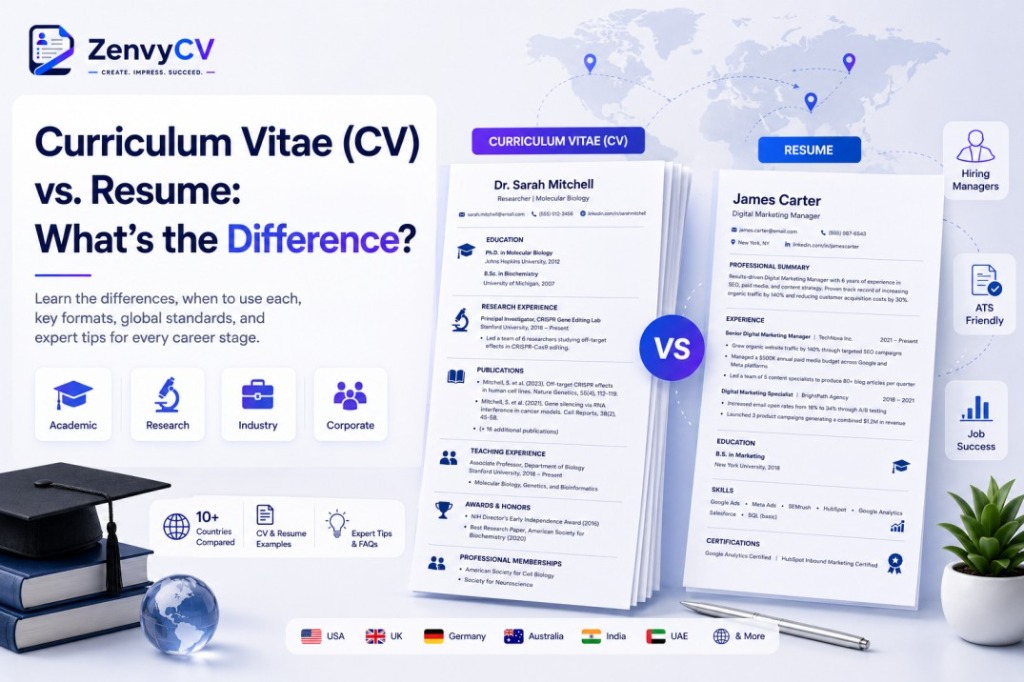
Cover Letter vs Resume
A resume tells an employer what you have done. A cover letter tells them why it matters for this specific role. A resume provides a factual record of your career, while a cover letter provides context, motivation, and personality behind that record. Used together, they give a hiring manager a complete picture instead of just a list of credentials.
FAQs About Cover Letters
Is a cover letter still necessary?
In most cases, yes. Field research shows that tailored cover letters can lift callback rates by over 50% compared to sending no cover letter at all. Some employers read cover letters less consistently than others, but a specific, well written letter rarely hurts your chances and often helps you stand out.
How long should a cover letter be?
A cover letter should be about half a page, roughly 200 to 350 words, or three to four short paragraphs. This length is long enough to make your case but short enough to respect a recruiter's limited time.
Should I address the hiring manager by name?
Yes, whenever you can find it. Check the job posting, the company website, or LinkedIn for the name of the hiring manager or recruiter. If you truly cannot find a name, use a neutral greeting like "Dear Hiring Team" instead of an outdated phrase like "To Whom It May Concern."
Can AI help write cover letters?
Yes, AI tools can help you draft a starting structure, brainstorm phrasing, or check grammar. However, you should always personalize the final version with your own specific achievements and voice. A cover letter that reads as generic or clearly AI generated with no personal detail can hurt more than help, since experienced recruiters can often recognize unedited AI output.
Should every job application have a different cover letter?
Yes. Even small adjustments matter. You do not need to rewrite the entire letter from scratch each time, but you should update the company name, the specific role, and at least one detail that shows you understand what that particular employer needs.
Should I include salary expectations?
Only if the job posting specifically asks for them. If it does not, leave salary out of the cover letter entirely and save that discussion for later in the interview process, where you will have more context to negotiate effectively.
What should you avoid in a cover letter?
Avoid generic templates, restating your resume word for word, exceeding one page, using desperate or overly casual language, and making any claims you cannot back up with specific evidence. Also avoid negative comments about previous employers, which can raise concerns about professionalism.
Can I apply without a cover letter?
Yes, if the application does not request one and there is no field to submit it. However, many companies that do not technically require a cover letter still read one frequently or always when it is included, so submitting one even when optional can still work in your favor, especially for competitive roles.
What font should I use?
Use a simple, professional font such as Calibri, Arial, Georgia, or Times New Roman, sized between 10.5 and 12 points. Match the font to your resume so the two documents look like a cohesive package.
What file format should I send?
Send your cover letter as a PDF unless the employer specifically requests a different format, such as Word (.docx). PDF preserves your formatting across devices and prevents accidental edits, while still being compatible with most applicant tracking systems.